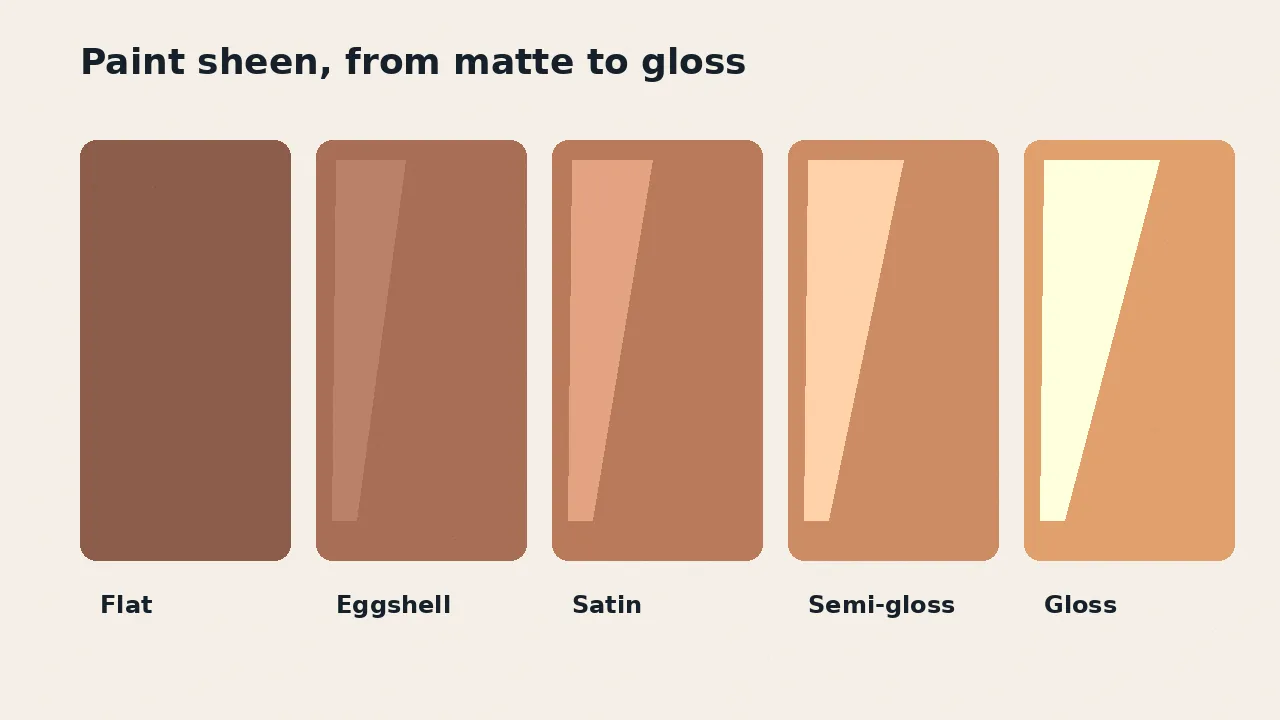
Sheen is how much light the dry film reflects, and it changes both the look and how the wall lives. There is no single “best” sheen — there is a sheen for the surface and the traffic.
The usual ladder
- Flat / matte. Hides bumps and roller marks. Standard for most ceilings and for low-traffic adult rooms if you can live with gentler cleaning.
- Eggshell. A soft glow, still fairly hiding, usually the everyday choice for living rooms, bedrooms and hallways.
- Satin. More wipeable; common in kitchens, family rooms, kids’ rooms and on some trim. Shows more surface irregularity than eggshell.
- Semi-gloss. Traditional for trim, doors and many bathrooms. Marks more every dent, so prep has to be better.
- Gloss. Highest reflection; occasional use on doors and furniture-grade trim. Forgiving of nothing.
Two rooms in the same colour can still look unrelated if one is eggshell and one is semi-gloss. If you are painting a whole interior, pick a sheen plan (ceilings flat, walls eggshell, trim semi-gloss is a common one) and put it on the brief. Painters can help with samples; say so on the quiz if you want that help.
Sheen also affects touch-ups. Flats usually blend more easily; glossier films often flash if you spot-paint a patch later. That is not an argument against washable sheens in a kitchen — it is a reason to keep a labelled tin.