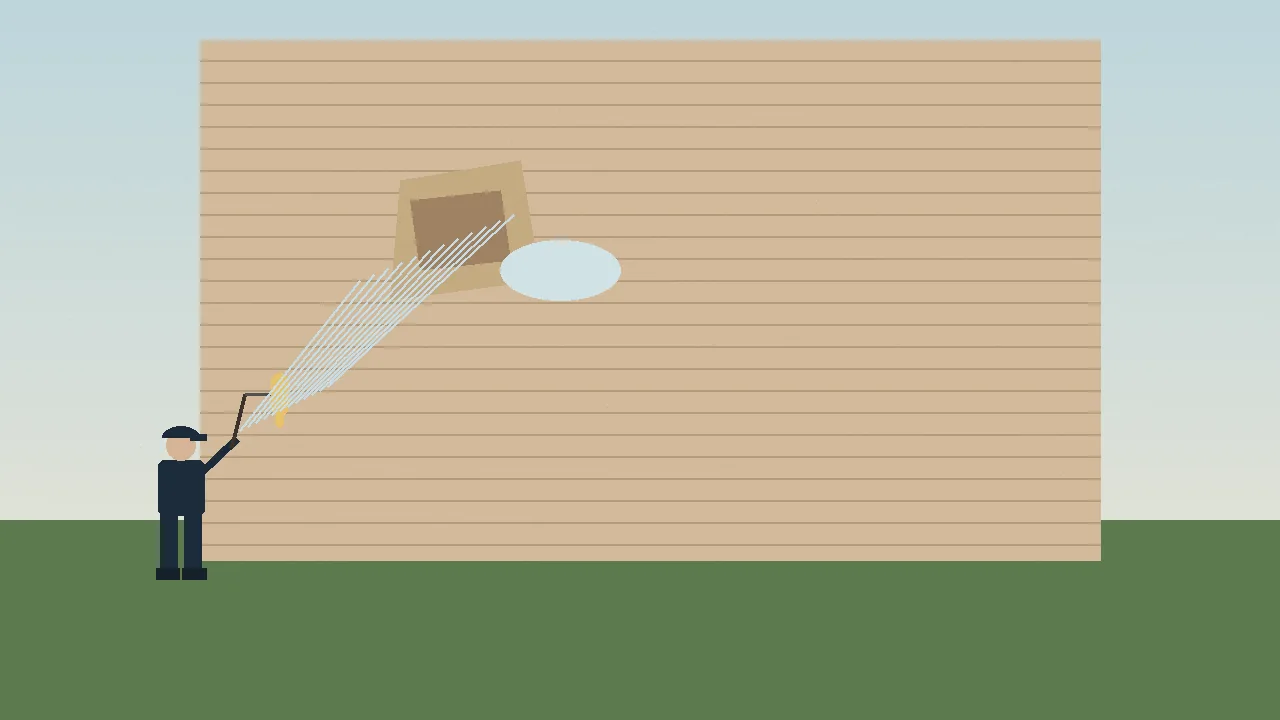
Exterior paint fails from the bottom up: dirt, chalk, mildew, loose film, open joints, and moisture that never had a way out. A glossy new colour over those problems is a short-lived colour.
What careful exterior prep looks like
- Wash with a method that matches the siding. Pressure is a tool, not a personality trait — too much water, too close, drives moisture into wood and can break the face of stucco or wood.
- Dry time. Painting a damp wall is how peeling starts. Dew, shade and a recent storm all change the clock.
- Scrape and sand failed paint back to a firm edge. Feather, don’t leave a ridge that telegraphs through the new film.
- Prime bare substrate and rusty metal. Spot-prime, then finish coats. Bare cedar, tannin-rich woods and water stains all have primers made for them.
- Caulk joints that should be closed. Do not caulk the weep paths in windows or the gaps that let a cavity drain.
- Fix rot and failed caulk before the first finish coat. Paint is not a patch for a window sill that’s soft under a thumb.
Angi’s 2026 exterior ranges assume professional work; they also flag extras such as stripping and washing. If the house needs heavy stripping, ask for that as its own line, not as a hope buried in a low bid. The cost guide and exterior painting page sit alongside this one.
Sources (checked November 2026)